Learn GitHub Copilot App through a realistic Java scenario
Fix and extend a Java shop, polish its UI in a Canvas, get a rubber duck critique, and coordinate five subagents to build mock checkout.
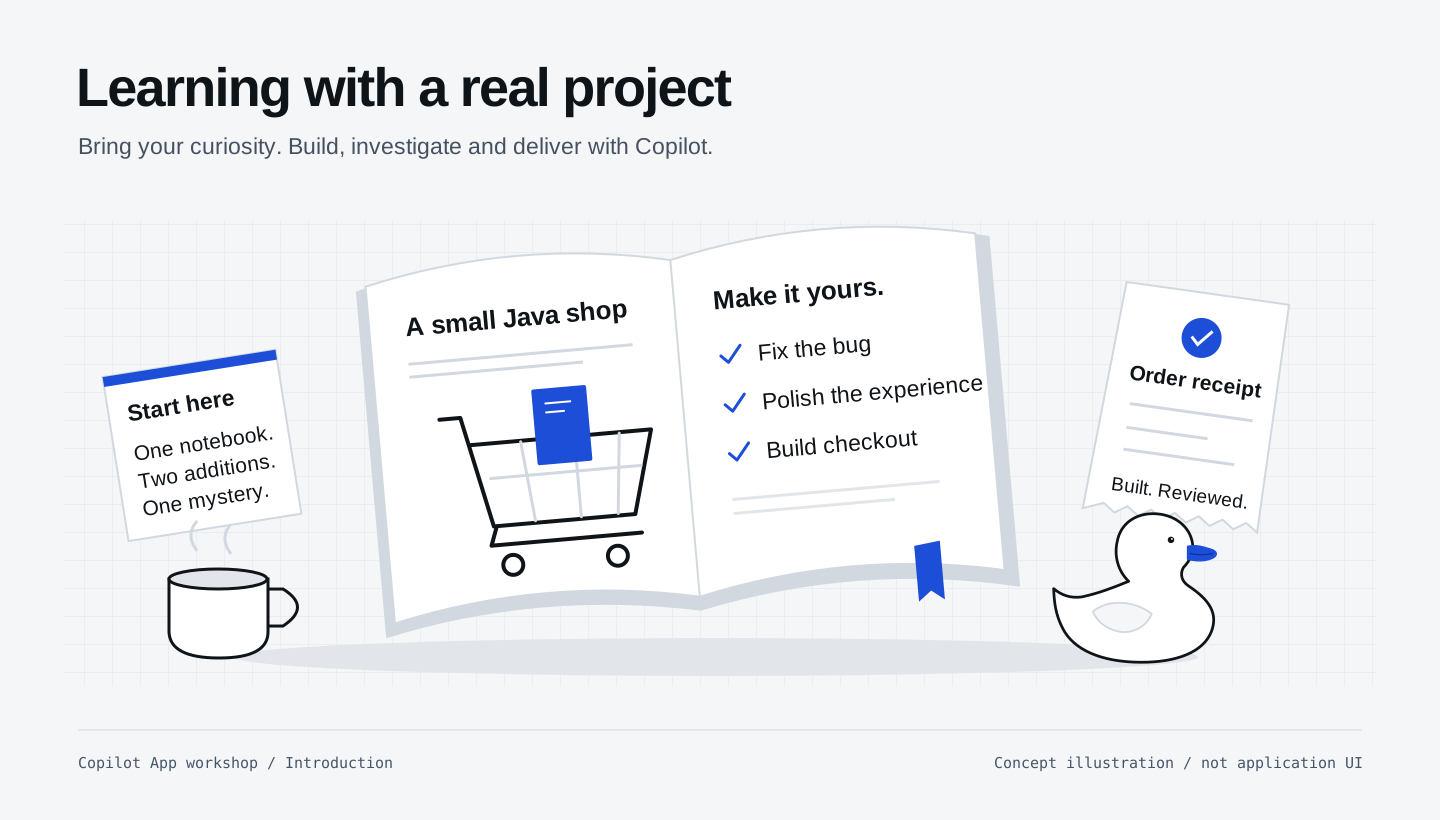
The scenario
“I added the notebook twice. Why is there still only one in my cart?”
In this hands-on workshop, use GitHub Copilot App to take a small Java shop from a reproducible bug to a reviewed result. Fix cart quantities, generate item removal, then use a shared Browser canvas, Pick & polish and impeccable to improve an observed UI issue.
Investigate an N+1 query using MCP evidence. Build independent improvements
in two worktree sessions, then integrate their PRs with Agent Merge.
Get a second opinion from rubber duck and coordinate five specialist
agents in parallel child App sessions: four writers implement mock checkout
and its tests while a read-only reviewer checks their work.
Reuse Agent Merge to deliver its reviewed PR into your own main,
then verify the merged application in the orchestrator’s session.
Finish with Chronicle and a clear handoff.
The shop is intentionally small: Spring Boot, H2 and plain JavaScript. You do not need Docker, a payment provider, a frontend build or advanced Hibernate knowledge. BootUI supplies runtime data through MCP for the performance exercise.
Set up your App workspace Get the template
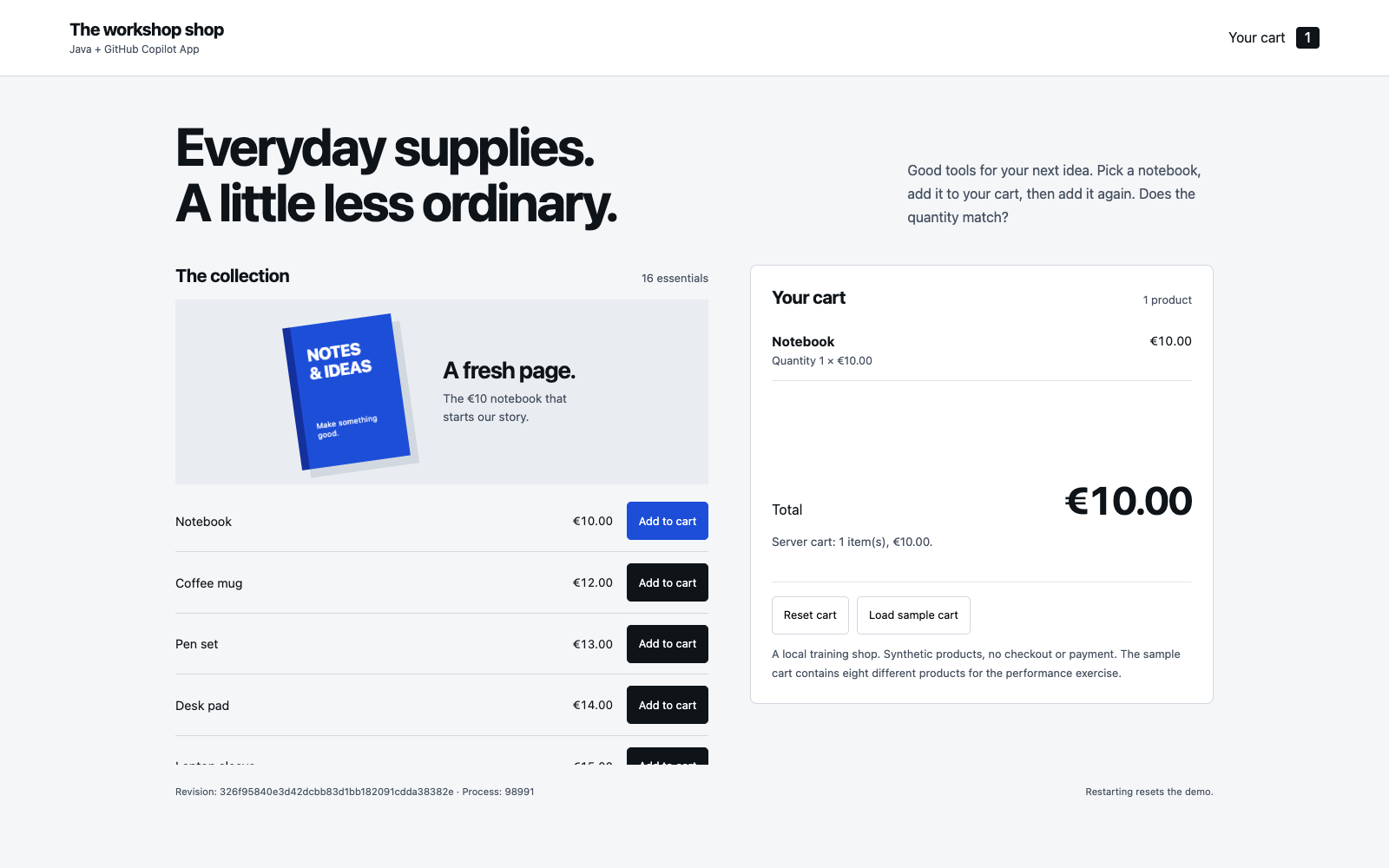
One shop, four tickets
Here, tickets are exercise briefs, not GitHub issues. You do not need to create issues in your repository.
| Ticket | Customer outcome | App practice |
|---|---|---|
| Fix adding the same product twice | Quantity and total accumulate correctly | Plan, use a Java skill, reproduce a failing test and guide the fix |
| Generate item removal | Remove one product without losing the others | Define expected behavior, generate backend and UI code, then preview and polish in a Canvas |
| Fix repeated product queries | The cart keeps its contents with fewer SELECTs | Use MCP evidence, diagnose with a skill, verify the query budget |
| Build and deliver mock checkout | Place a local order, see a receipt and start shopping again from the app on main |
Agree on contracts, coordinate five subagents, verify failures/retries and deliver a reviewed PR with Agent Merge |
Start with Fusion Standard, or a strong coding model if Fusion is unavailable.
Use higher effort when a problem calls for it, not by default.
Review permissions, tests and changed files at every stage.
Each of the first three tickets has a named session and one reviewed PR,
merged before the next task. Removal and Canvas polish share a PR.
After both parallel PRs merge, keep Cart: boundary tests for the critique.
Then start a fresh Cart: mock checkout session from verified main.
Five child sessions start from one reviewed commit in five separate worktrees.
Four write the backend, UI and tests; one reviews without editing.
The checkout session integrates their work into one feature branch.
Mock means no real payments:
the order, receipt and cart clearing must actually work.
The feature branch is a staging point, not the finish line: after your scoped
approval, Agent Merge merges the checkout PR; the orchestrator then verifies actual main.
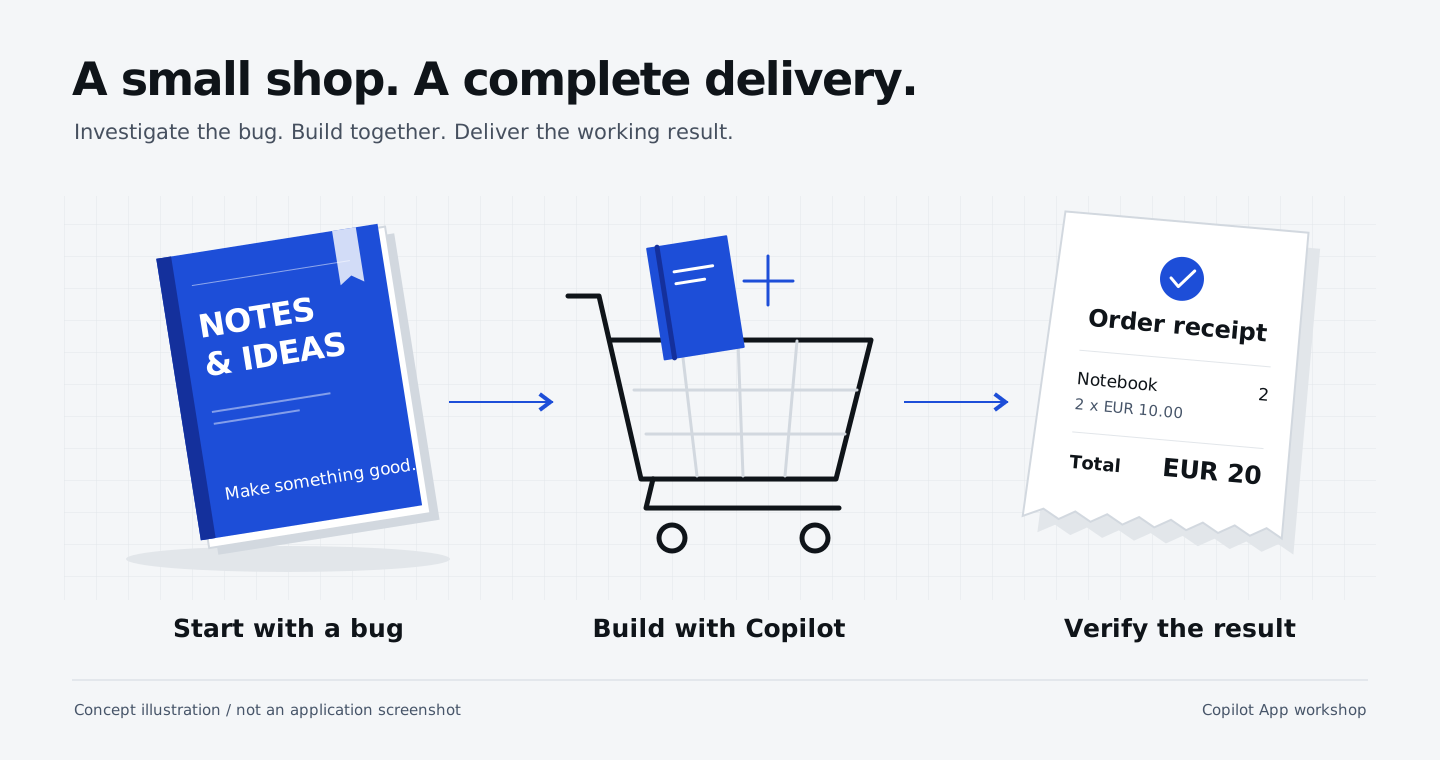
Workshop flow
Start with setup, then follow the chapters in order. There are no chapter deadlines. Take a break before the parallel work and ask for help whenever you need it.
- Investigate with Copilot, using a reproducible cart bug.
- Choose modes and effort, then use a skill to fix the bug: generate tests, fix, review and merge the quantity-fix PR.
- Generate and iterate in a new Cart: item removal session from updated
main. - Use Canvas and Pick & polish in that removal session, then merge the feature and accepted polish in one PR.
- Investigate runtime with MCP in a new Cart: query optimization session, then merge its N+1 fix PR into
main. - Start two isolated sessions from the reviewed main to improve the empty-cart experience and add boundary tests.
- Merge PRs with Agent Merge: UI first, then boundary tests, reviewing repairs and authorizing each merge separately.
- Review with rubber duck in the existing Cart: boundary tests session.
- Coordinate five subagents from Cart: mock checkout: run four writers and one read-only reviewer in parallel, integrate their work, deliver one reviewed PR with Agent Merge and verify the merged app.
- Improve usage with Chronicle in a fresh Cart: Chronicle session: review token efficiency, turnaround and quality in this repository over the past seven days.
- Return to Cart: mock checkout for the read-only final review and handoff, keeping unfinished work separate from the verified result.
What you will leave with
On the completed normal path:
- A reviewed shop on your own
mainwith four tickets, usable UI improvements, a working mock checkout and regression coverage. - Evidence from previews, tests, MCP, PRs and the independent critique, with unavailable or unfinished work recorded.
- A merged checkout PR with four code handoffs and read-only review findings, plus a workflow improvement from Chronicle or transcript review.
Record blocked steps, local recovery and demonstrations as limitations, not completed normal-path results.
Before you begin
You need JDK 21+, Git and a supported Copilot App account. Create your own
repository from the template; the three Java skills are already included.
Delivery starts with the quantity-fix PR, so you need GitHub Actions and
permission to push branches and merge PRs throughout the workshop.
Local recovery is documented for blocked participants.
The skills chapter also explains how to install them in another project.
The App’s Browser canvas, Pick & polish, bundled impeccable, rubber duck
and child-session orchestration are used in later exercises; availability
depends on your build and policies. /fleet is explained as an alternative.
Each chapter explains how to record a blocked step or demonstration.
Keep the prompt cards and
worksheet nearby.